
Choosing a Piano for Beginners: What Really Matters
When people want to learn to play the piano for the first time, the same question almost always comes up: “Which piano is suitable for beginners?” It seems logical that something like a “piano for beginners” exists, just like you have beginner bikes or beginner guitars.
But in reality, the answer is surprisingly simple and perhaps counterintuitive: No, there is no piano specifically for beginners. Every pianist – including a beginner – benefits from the best possible instrument. And there are very good reasons for that.
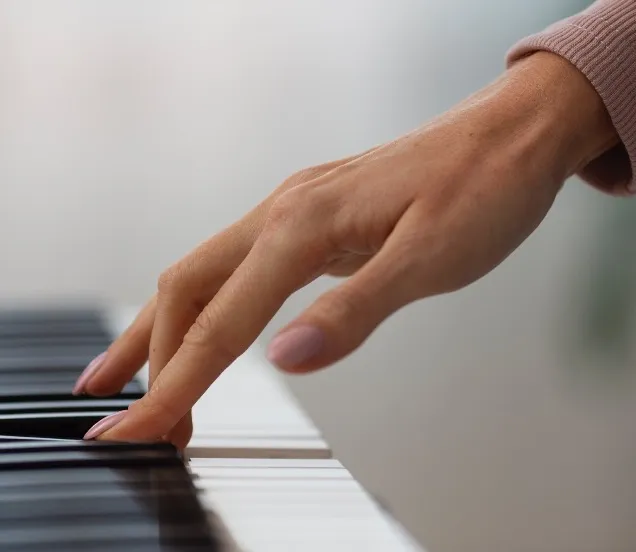
A better piano is simply easier to play
A high-quality piano responds much more accurately, consistently, and predictably to what you do with your fingers. You notice it immediately: you need less force to press the keys, you get more control over playing softly and loudly, the resistance is even across the entire keyboard, and you don’t suffer from “dead” keys or an uneven touch.
For a beginner, this is crucial. You are still at the very start of your technical development: fingering, hand position, relaxation… If the instrument doesn’t support you in this, you risk developing bad habits or becoming frustrated more quickly.
A lower-quality piano often demands exactly the opposite: too much force, leading to tense hands; an unpredictable dynamic range, making you play insecurely; and a weak action that gives you little control. In other words: you don’t really learn how to play the piano, you mainly learn how to fight with your instrument.

You only develop technique on a good instrument
Piano technique is essentially about subtle control: the difference between p and pp, playing legato versus staccato, correctly executing repetitions, smooth fast passages, and a good balance between both hands. It is precisely these nuances that make music expressive and personal.
On a lower-quality piano, these differences are often barely audible. Everything sounds more or less the same, regardless of how well or poorly you play. As a result, you hear your own progress less, you get less feedback from the instrument, and you develop your fine motor skills less.
A good piano, on the other hand, immediately “rewards” correct technique: small improvements can be heard and felt right away. This makes learning not only more efficient, but also much more motivating. In that sense, a quality instrument is actually the best teacher you can have.
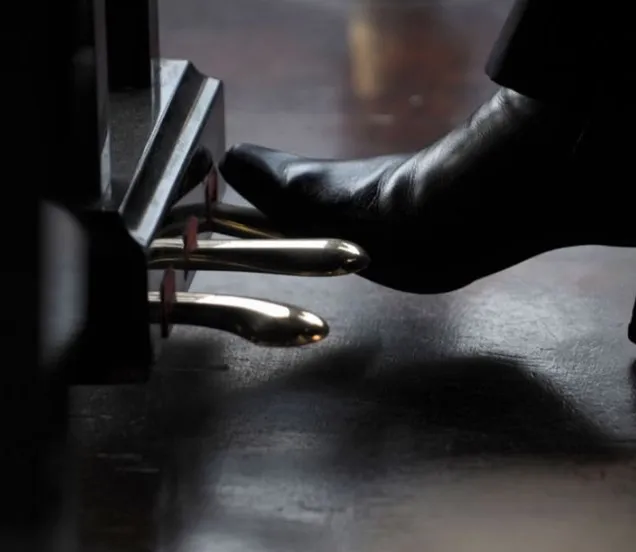
You only learn proper pedal use on a real piano
The sustain pedal is not a simple on/off switch. On a proper acoustic piano, you can work much more subtly: you learn to use half-pedaling, blend sounds delicately, and truly control the resonance. This gives your playing color, depth, and musicality.
On many cheap instruments (especially digital ones), the pedal often works like a basic switch. You hear little real tone enrichment, which means you quickly learn to use the pedal in a technically incorrect way. When you later move to a better piano, you often have to relearn how to use the pedal in practice. And that’s a waste of time and energy.

Playing enjoyment = motivation = perseverance
This may well be the most important point of all. A good piano sounds richer, feels better, invites you to play, and even makes simple pieces enjoyable to practice. You actually feel like sitting down at the keyboard, simply because it’s nice to play.
A weak instrument does exactly the opposite: it sounds dull or harsh, feels heavy, frustrates, and turns practice into something you have to do instead of something you want to do. Making music quickly becomes a duty rather than a pleasure.
The reality is harsh but honest: the chance that you quit piano is much higher if you start on a poor instrument. Not because you lack talent, but because the instrument quietly takes away your enjoyment of playing. And without enjoyment, sticking with it becomes almost impossible.
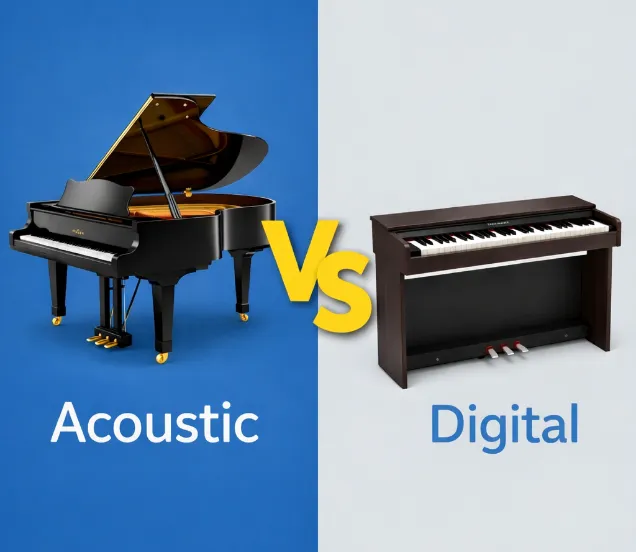
Acoustic vs digital: also the smarter financial choice
Many beginners start with a cheap digital model “just to see if it’s for them.” In the short term, that may seem like a safe choice, but in the long run it is often actually more expensive. An acoustic piano retains its value much better, can easily last 50 to 60 years, and can be resold without major loss.
A digital piano, on the other hand, becomes technologically outdated quite quickly. The electronics wear out, components become obsolete, and over time electronic parts can become less stable or harder to replace. As a result, the second-hand value drops sharply. After 8 to 10 years, a digital piano is usually technically outdated and economically almost worthless, while an acoustic piano lasts for decades and retains its value far better.
The biggest misconception: “I’m just a beginner”
You hear this all the time: “I’m just a beginner, I don’t need a good piano yet.” But if you think about it logically, that’s actually not true. Who benefits most from good equipment, clear feedback, and an easy-to-play instrument? Exactly: the beginner.
An advanced pianist can play on almost anything and adapt, but a beginner needs all the help they can get. A good instrument makes mistakes more audible, helps build proper technique, and makes practicing less frustrating. This way you learn faster, it stays fun, and the chances that you stay motivated and keep going are much higher.
Conclusion: the best piano you can afford
Because in the beginning, your instrument literally forms your foundation: everything you feel, hear and automate is built on what you have under your fingers every day. A good piano helps you hear nuances, control your touch, understand dynamics and correct mistakes more quickly, while a weak instrument does exactly the opposite: it masks errors, limits your possibilities and unconsciously teaches you bad habits. That is why “too good for a beginner” is actually a myth: you can only start too poorly. Starting on a solid instrument not only gives you a better chance to improve, but above all to stick with it.
Still in doubt or just want to feel and hear the difference for yourself? Then you are always welcome in one of our 8 stores, where you can try out different pianos in a relaxed setting and receive personal advice from our specialists. Prefer to explore online? Discover our full range of acoustic pianos and grand pianos on the Piano’s Maene webshop, with clear information, photos and up-to-date availability. This way, you can always make a well-considered choice, tailored to your budget and your playing pleasure.